Uploading a Data Source
Robonito allows you to upload and bind dynamic datasets to your automated tests using tabular files. Each parsed row in your uploaded file represents a distinct iteration matrix that the automation engine will sequentially execute.
Supported File Types
Robonito's parser currently supports the following structured text formats:
.csv– Comma-Separated Values.xlsx– Excel Spreadsheets
1. Uploading the File
To securely import your dataset into the Robonito database:
- Navigate to Data Sources: From the main dashboard, locate and click the Data Source icon in the left navigation sidebar.
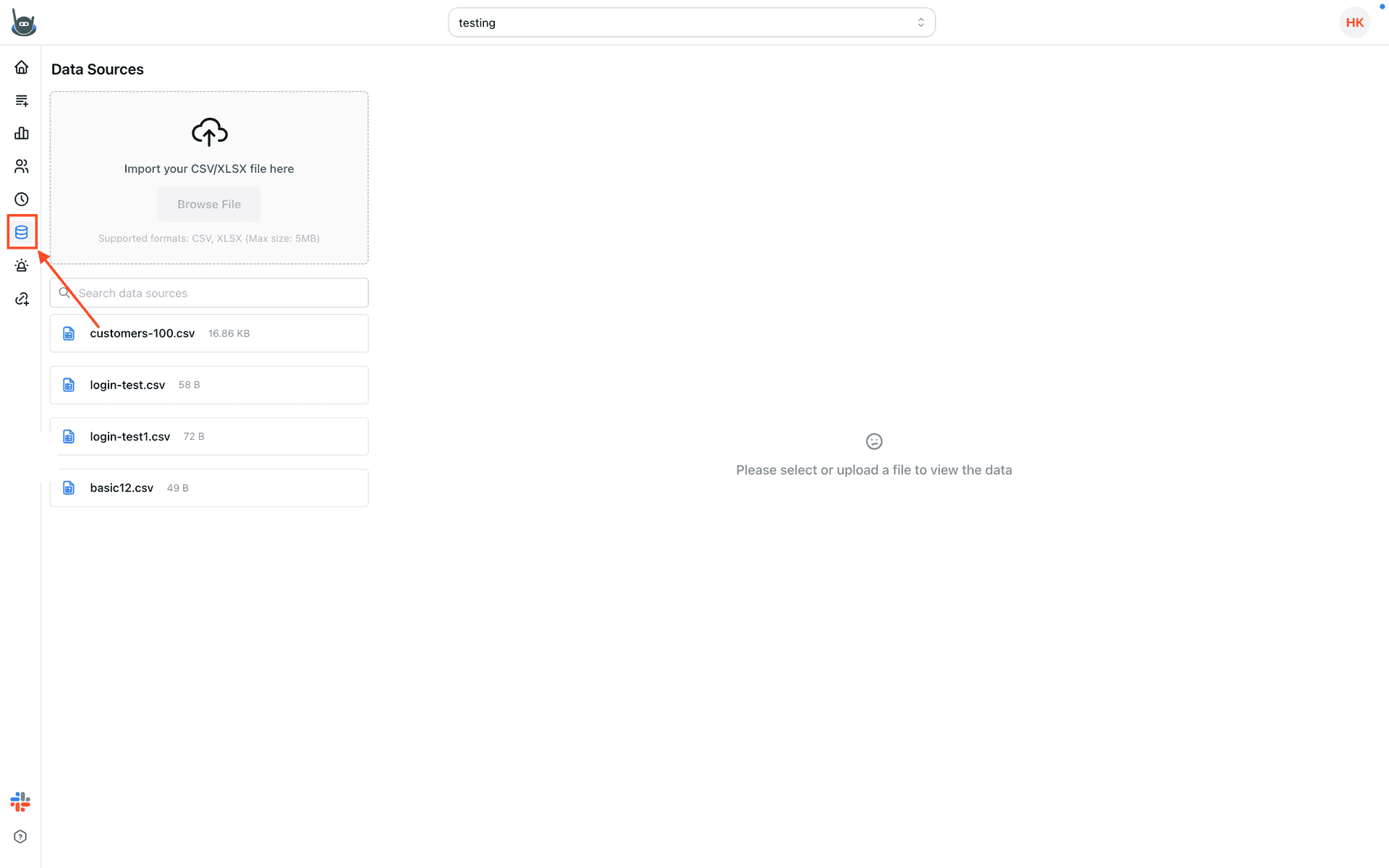
- Launch Uploader: Click the primary Browse File button located on the top right.
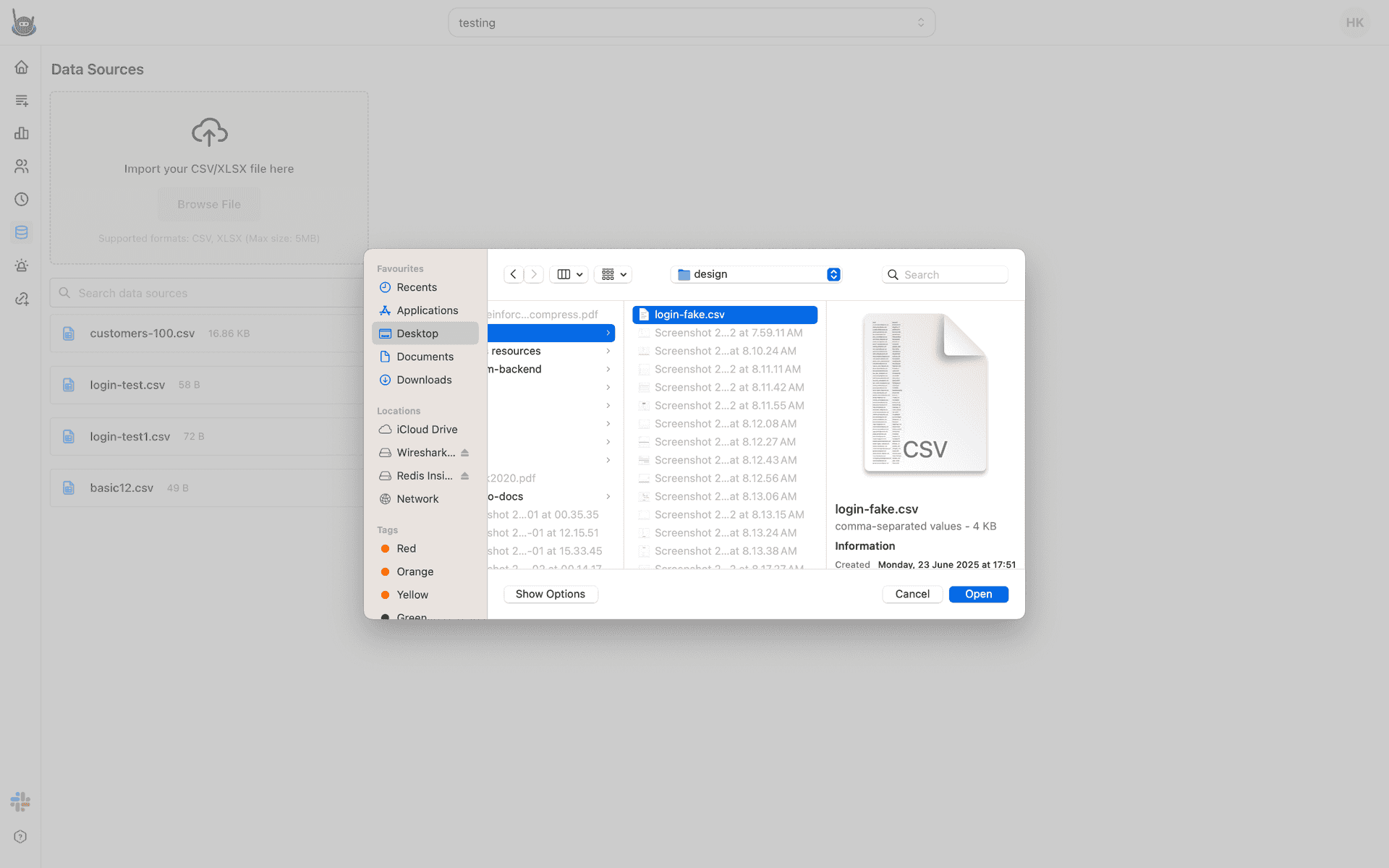
- Select File: Select an eligible
.csvor.xlsxspreadsheet strictly from your local machine.
The file will upload, and the backend engine will automatically parse the headers into column objects.
2. Previewing the Data
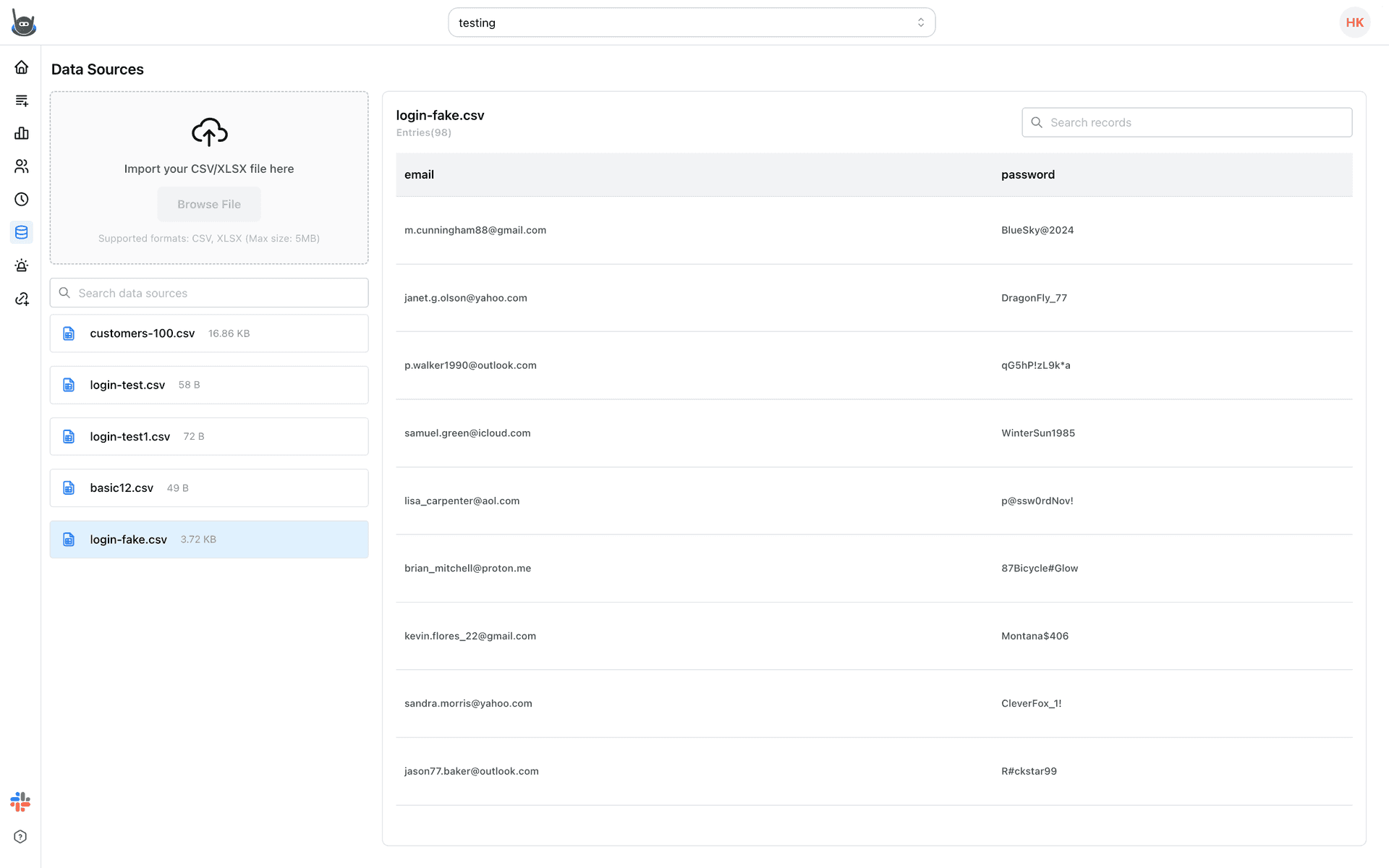
Immediately following a successful upload pipeline, you will see a preview table representing your exact data matrix.
- Scroll through the rows and columns to visually verify all data was parsed cleanly.
- Search for specific string values using the data-table search box to ensure encoding limits weren't broken.
Data Formatting Rules
To ensure successful data-driven execution algorithms, adhere strictly to the following formatting rules before uploading:
- Header Row: Your table must contain a row explicitly defining the column headers (e.g.,
email,password,targetUrl). These exact string matching headers are subsequently used as parameter identifiers in your Robonito recorded test steps. - Clean Structures: Do not use merged cells or complex styling within
.xlsxpayloads. Ensure the file contains strictly raw textual or numerical values.
Next Steps
Once the file is successfully parsed and saved into the workspace memory, you must actively link it to an execution target.
- Learn how to Apply a Data Source to a Test Case.