Applying a Data Source to a Test Case
Once you have successfully uploaded a Data Source (like a .csv or Excel file) to your workspace, the next step is to connect it to your test cases.
This process enables powerful data-driven testing by dynamically populating your automation inputs with values natively fetched from your attached spreadsheets row by row.
The Parameterization Workflow
To begin injecting data source values into your test flow, follow these steps:
1. Open the Test Explorer
- Navigate to the Test Cases view from the main Robonito dashboard.
- Select and open the specific test case you wish to parameterize.
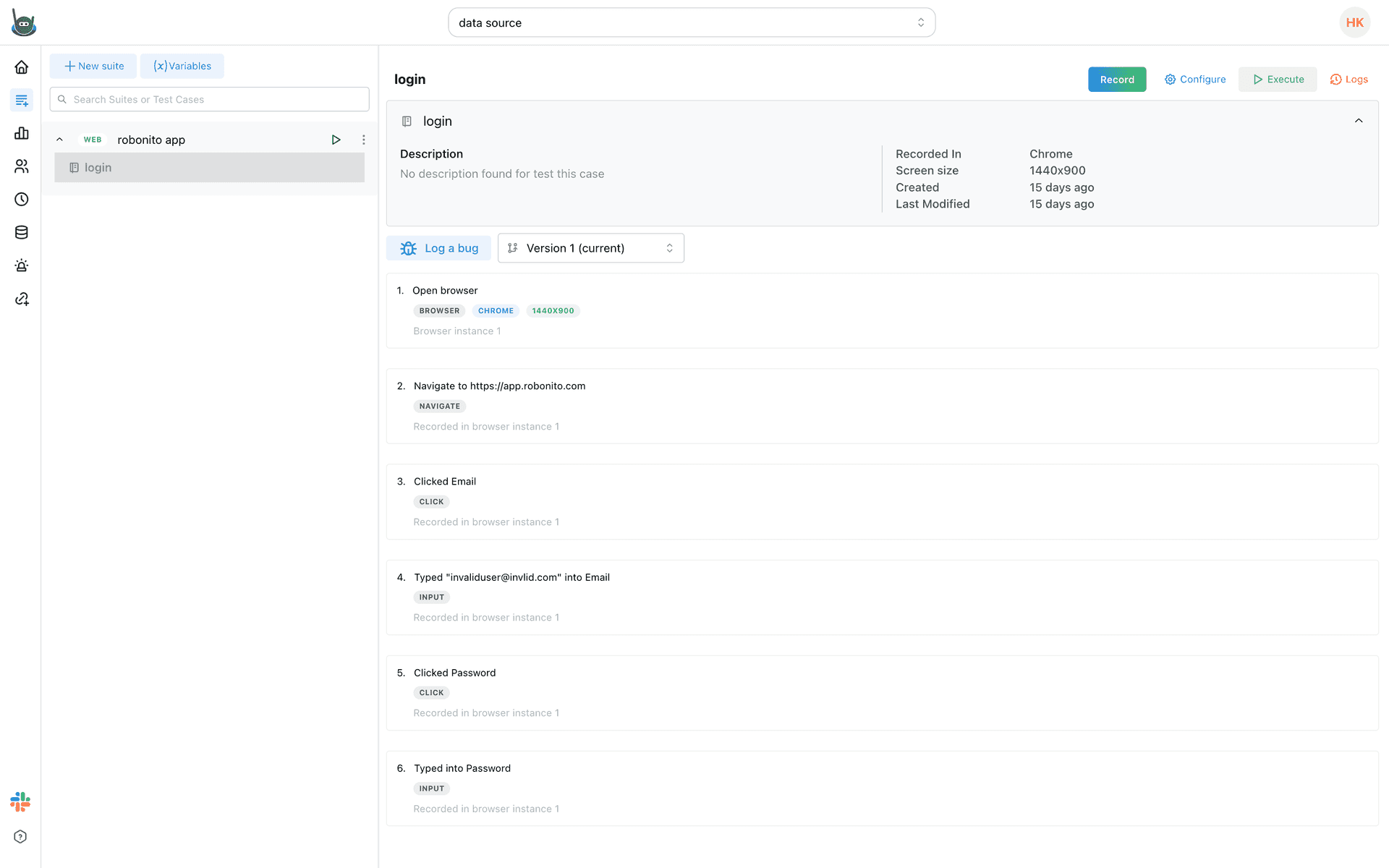
2. Select an Interactive Node
- Click on any test step within the timeline that requires text to be entered (e.g., a Fill Input or Type node).
- The step configuration panel will slide open on the right, allowing you to edit the Input Value.
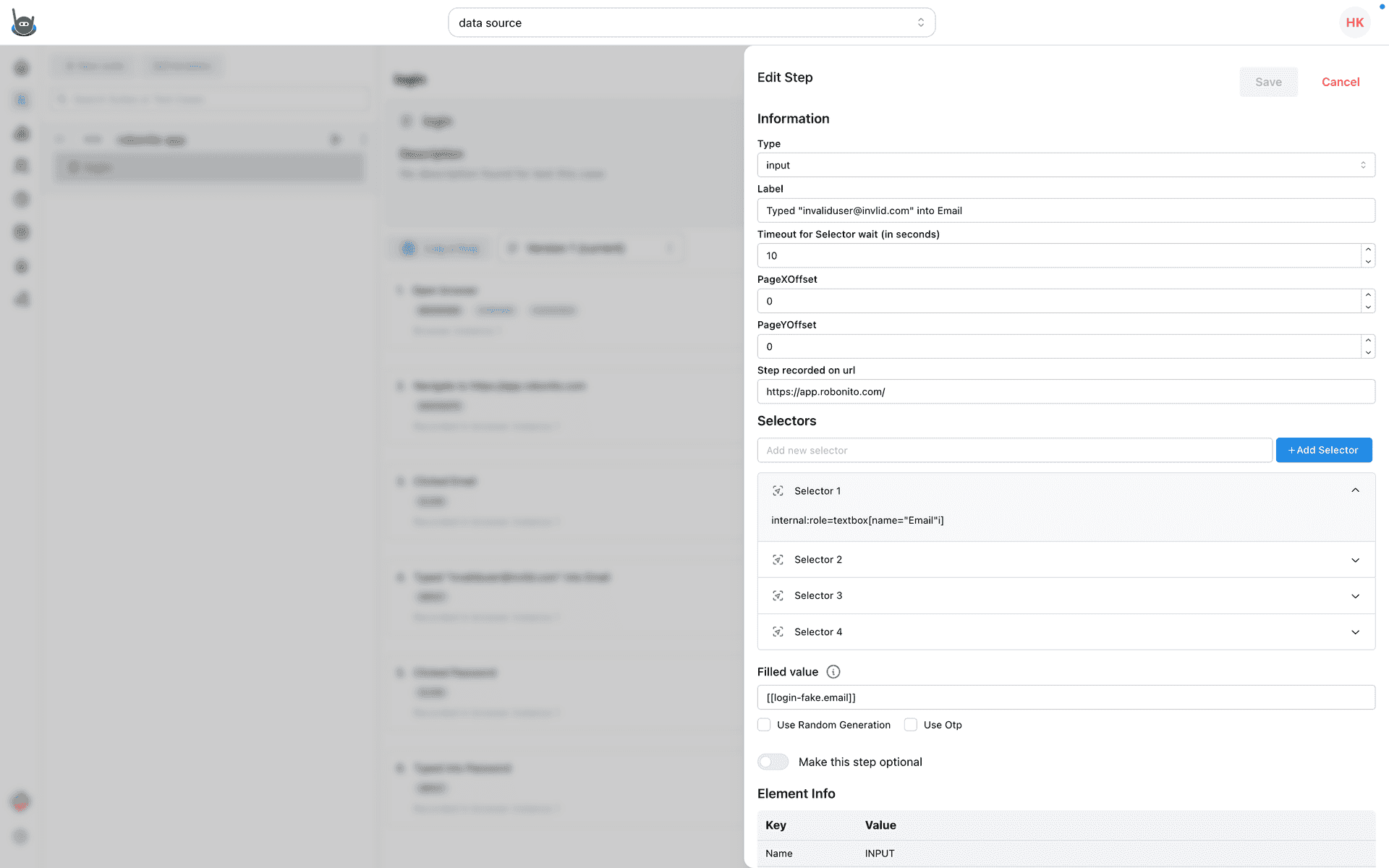
Injecting Data Source Values
Within the Input Value field, you can access your stored data sources seamlessly using Robonito's autocomplete syntax:
-
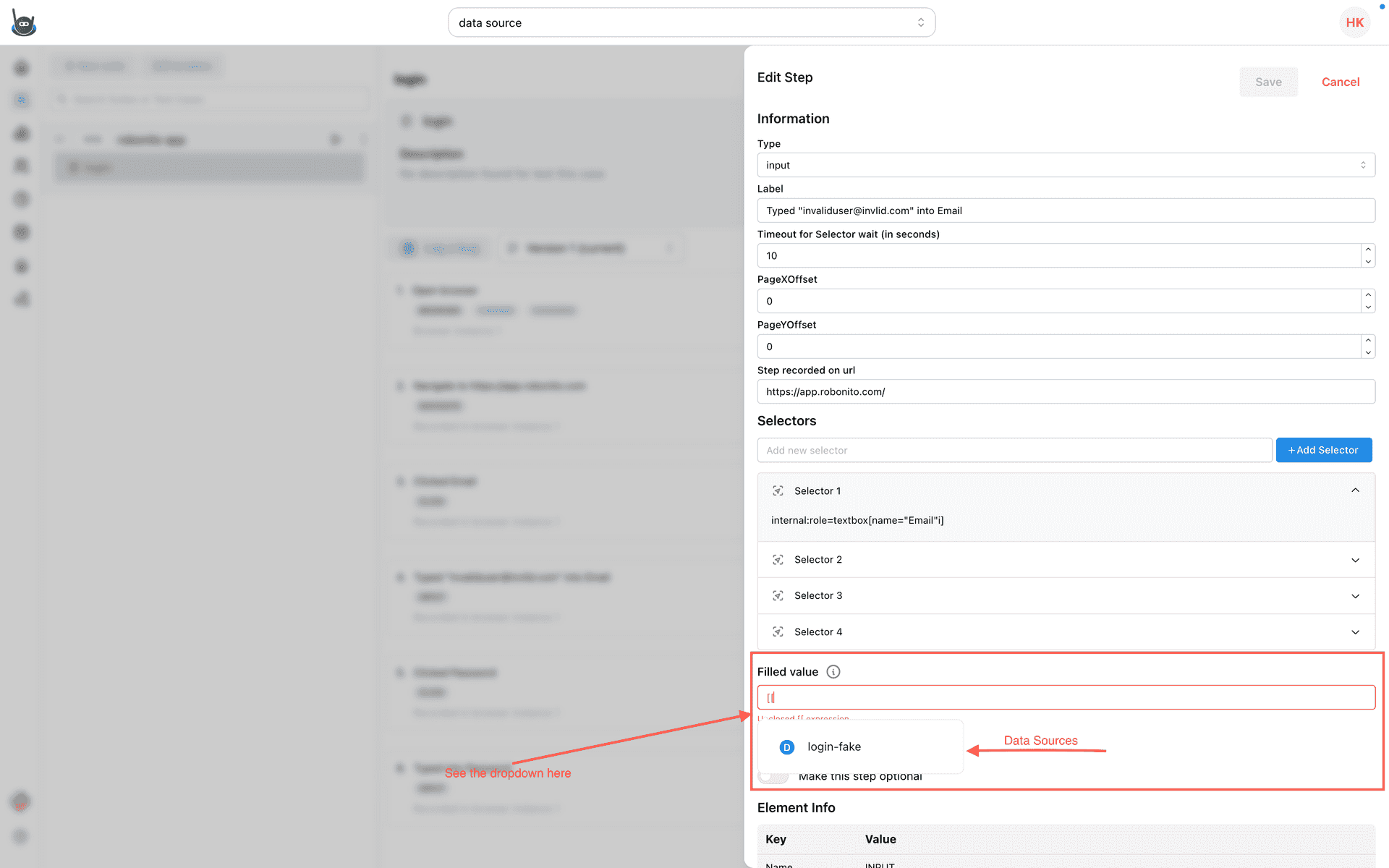
Trigger the Quick Menu: Start typing
{{@precisely in the input field. This prefix automatically opens a dropdown menu displaying all your locally uploaded data sources. -
Select the File: Click on the desired Data Source File Name from the dropdown list.
-
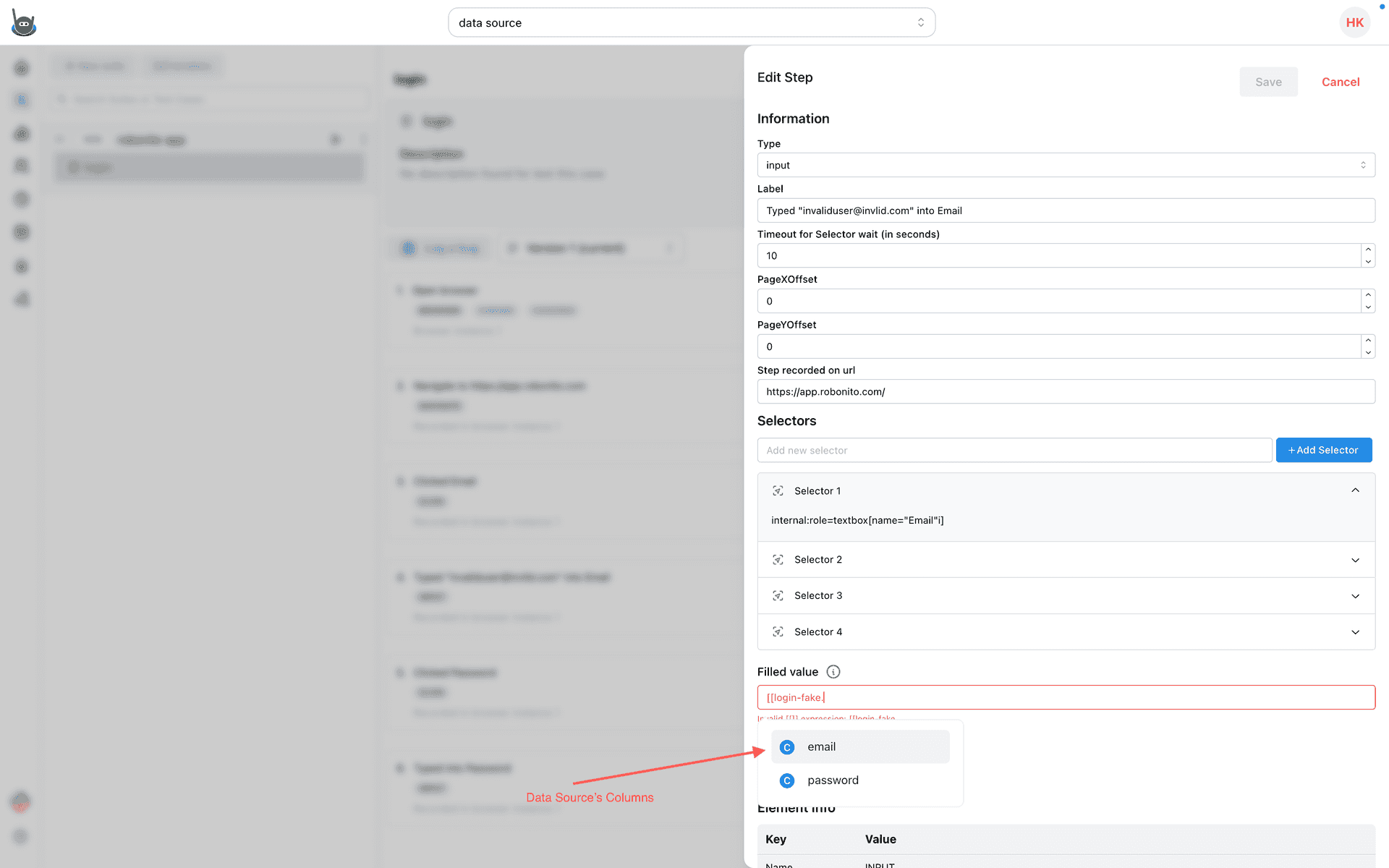
Select the Column: A secondary popup will immediately cascade to the right. Select your desired Column Name from that specific data sheet.
-
Completion: After selecting the column, the field expression string will automatically format using the correct engine syntax:
{{@FileName.ColumnName}}
Working Example
If your uploaded file is officially named users.csv and it contains a column explicitly titled email_address, your final field expression would correctly look like this:
{{@users.email_address}}
This explicit {{@...}} syntax commands Robonito's runtime engine to dynamically fetch the exact value from the email_address column corresponding to the current loop iteration during an execution sequence.
Important Injection Rules
Keep the following technical rules in mind when parameterizing fields:
- The Correct Trigger: The data source fetching popup only appears when you type the exact characters
{{@. (Regular variables use{{, while random values use{{$). - Exact File Accuracy: The file name and column name must reflect exact matches with the uploaded source schema.
- Preview Capability: You can visually preview your selected bindings directly within the test runner before officially kicking off the test loop.
Next Step: Once your data sources are linked, see Execution Strategy to understand how Robonito processes your spreadsheet during test runs.